

Infant Program
3 months - 18 months
Two special classrooms for children 3 months to 18 months
It begins here. Your infant’s mind is sensitive and is developing rapidly. He is eager to makes new discoveries each day! This once-in-a-lifetime process is supported with unconditional love in our Montessori infant program.
-
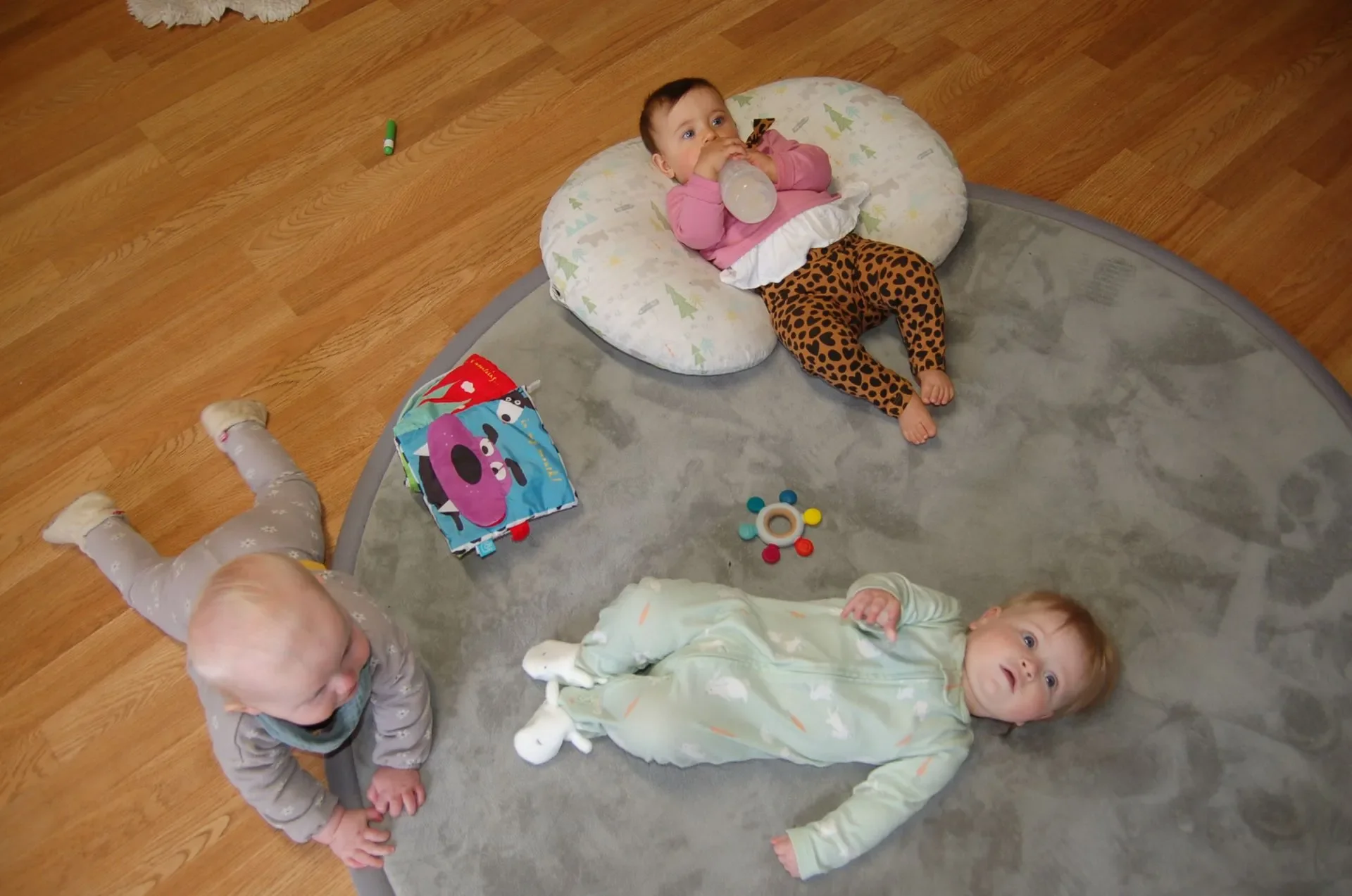
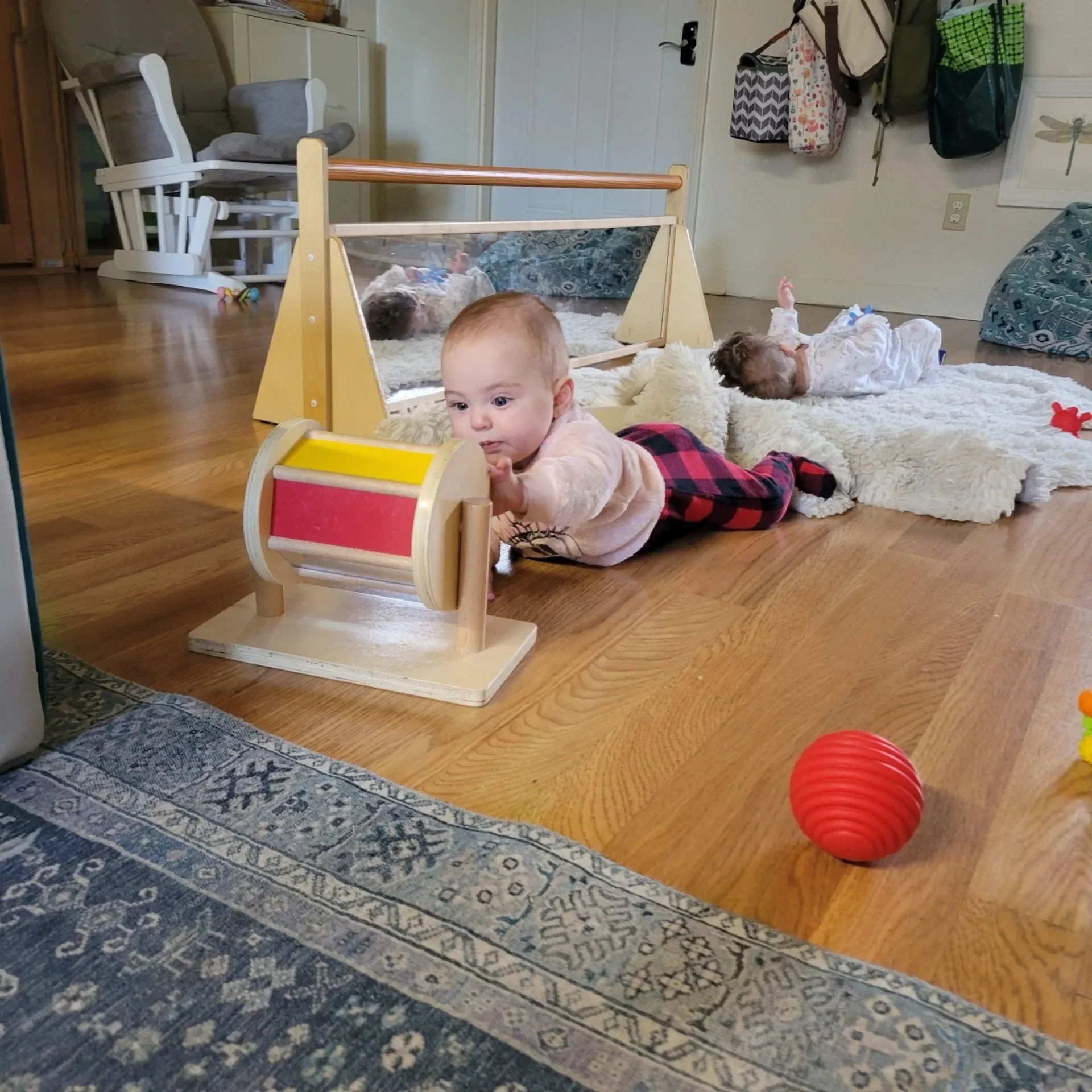
Our classrooms are designed entirely around the needs of your child with individualized plans that meet the individual needs of your child. A low rail anchored to the wall provides support as your child pulls himself up from the floor. A soft mat cushions any fall. Infant size shelves display beautiful materials designed to stimulate your child’s senses. Teachers speak in gentle tones and the decor is understated and homelike. Your child will feel right at home in an environment created just for him or her.
-
Crawling. First words. Walking. What was impossible yesterday seems easy today. We celebrate these milestones and keep in daily communication with you to ensure we are always doing what is best for your child’s development.
-
Infant classrooms are led by fully trained teachers. This training program is a thorough education in child development from birth to age three and prepares the teacher to create an optimal program for your child. More than just a job – our Montessori teachers have a career of choice because of their love for infants, their interest in Montessori education and their unwavering commitment to do what is best for children. Infants can never have too much love, care and affection. To ensure your child receives personalized attention, our infant program under 12 months offers a 1:3 ratio and our program 12 months to 18 months provides a 1:4 ratio.
-
Your infant is sensitive to change and routine, and we make every effort to ensure consistency to help your child feel safe and comfortable. Our program is offered on a five-day schedule only, so she will be with the same children and adults every day. Sleep and eating schedules are based on your child’s individual needs, which are carefully observed and documented for communication with you when you return.
-
No need to worry – your infant will be nurtured in a beautiful, safe and clean environment. From rigorous background checks for teachers, to CPR/First Aid Training for all staff, to a comprehensive school emergency plan, rest assured that we have thought of every detail to protect your child’s well-being.
-
At 18 months, your child is ready for greater challenges. Our school provides a continuum of Montessori education and your child will have a seamless transition to the Toddler program. Planned well in advance, this process is designed to make both you and your child comfortable. A meeting with the new teacher and brief classroom visits in advance of the move facilitate the transition.
-
Our son has been attending Nature's Way Montessori since he was an infant (he is now 2.5 years) and the teachers have been nothing short of wonderful, caring and truly dedicated. It's been amazing to see him thrive, grow and learn. We truly love the community and the experience he has had. The outdoor space is also incredible and allows a lot of play & important development he wouldn't get elsewhere. Highly recommend this place!
— Lauren Badia
-
We absolutely love Nature’s Way. Our son is 2.5 and has been attending since he was 8m old. He loves it there so much— he’s well taken care of and learns so much. The teachers are wonderful and caring. The school has built such a warm and caring community, it’s so nice to be a part of it. The program is very clearly more than just a day care!
— Cari Cameron

Toddler Program
18 months - 36 months
An academic program for students 24-36 months old.
Some refer to this developmental period as “The Terrible Twos.” We disagree; toddlers are terrific. We love everything about them – their energy, determination and curiosity – and purposefully created a very special place for your toddler to learn.
-
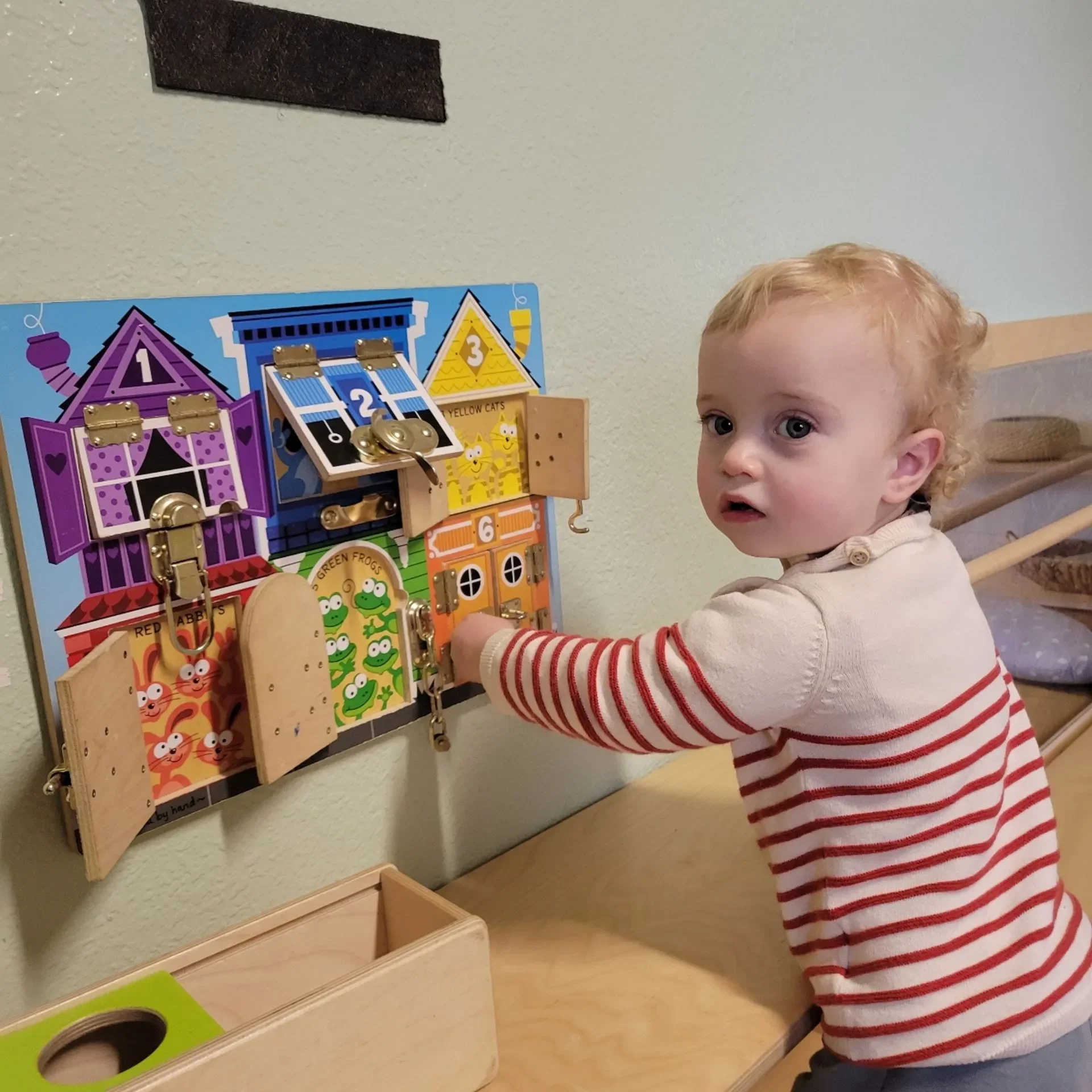
Children have an innate desire for independence, a quality that is nurtured in an environment tailored to their size, enabling them to perform tasks by themselves. Utilizing child-sized tools designed for their small hands, they learn to prepare and serve snacks to their friends, while a miniature broom provides the means for them to tidy up independently. They are introduced to essential self-care skills, including hygiene practices and toilet training, as part of their daily routine. Through these activities, your child not only acquires practical life skills and self-assurance but also fosters a deep-seated belief in their ability to effect positive change in the world. This hands-on approach to learning underscores the importance of doing things oneself, emphasizing that the journey towards self-reliance and making a meaningful difference begins with the mastery of simple, everyday tasks.
-
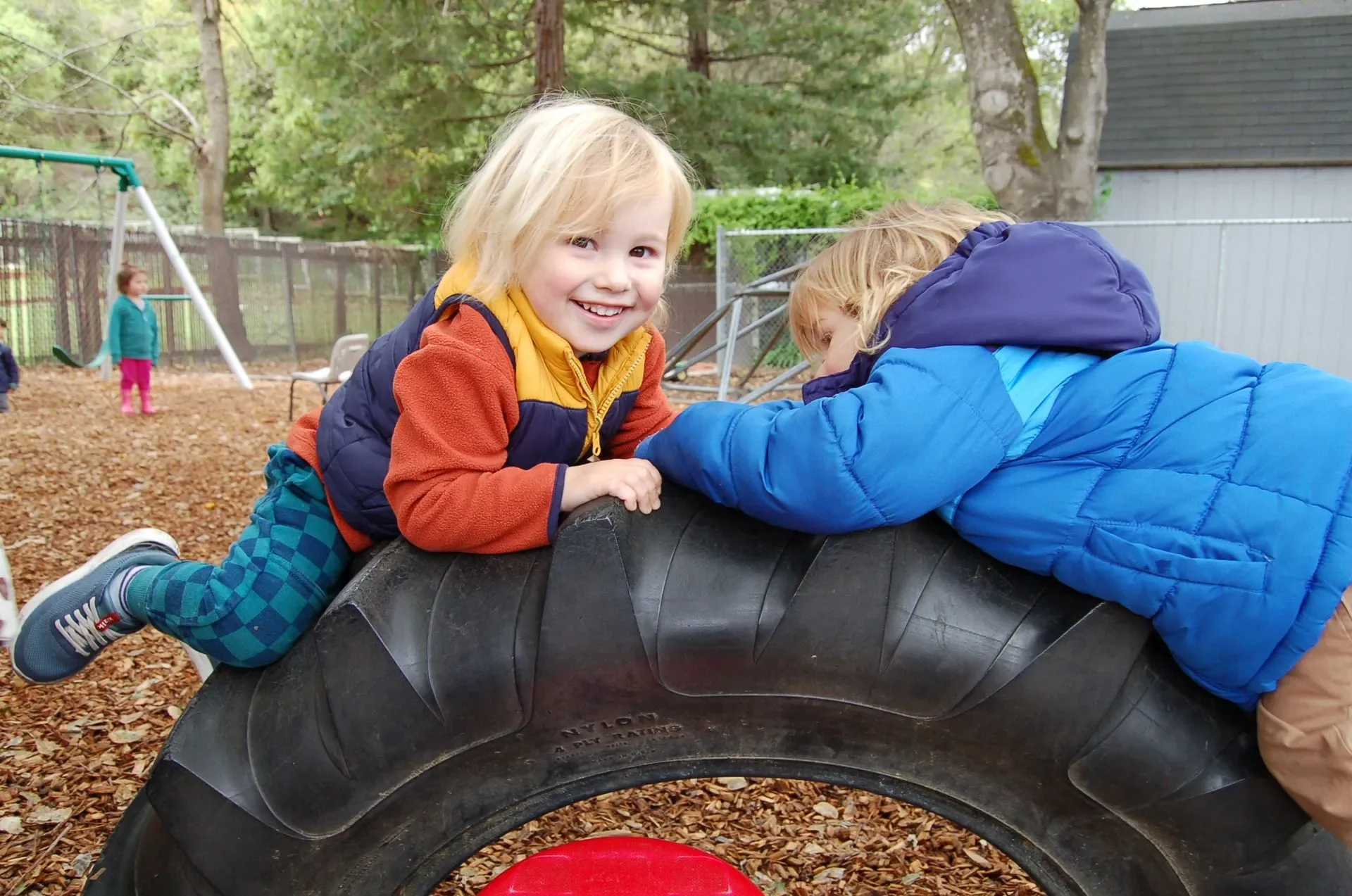
Our bright and sunny toddler classrooms are specially designed for your child between the ages of 18 and 36 months. It is a world scaled down to your child’s size. Here, your child paints, cooks, waters the garden, sings songs with friends and plays with materials that develop fine and gross motor coordination.
-
Where so many early childhood programs are chaotic and overwhelming, parents are often surprised to see the peaceful tone of our toddler classroom. The calm atmosphere and lack of distraction helps to develop impulse control and concentration, planting the seeds for learning in this classroom and beyond.
-
Our students grow together into a close-knit, caring community. When children work, learn and grow together, they learn much more than any of them could learn alone! Making first friends and learning how to function within a community is a life-shaping experience for your child. Your child emerges with strong friendships that will continue as she moves through the rest of the programs in our school.
-
We immerse your child in an environment filled with engaging and enriching dialogue to capitalize on this unique phase of swift language growth. As your child discovers that everything in their surroundings has a name, their curiosity about the world is ignited in a novel manner. Our toddler guides are specifically trained to provide your child with the foundational elements of language, enabling the natural assimilation of new words. This approach lays the groundwork for future skills in reading, writing, and self-expression, fostering an early proficiency and love for language.
-
Maria Montessori once said, “One test of the correctness of the educational procedure is the happiness of the child.” Take a peek into our Toddler classroom and you will see children who are happy, engaged and deeply connected to their friends and teachers. As a result, your child develops a deep affinity for school and a true love-for-learning.
-
Our methodology meticulously observes your child to identify the optimal moment for introducing a new skill, followed by giving them ample opportunities to practice—repeating the activity multiple times until they achieve mastery. We treat mistakes as valuable learning moments, fostering an environment rich in patience, trust, and respect. Here, the focus remains steadfastly on the learning journey rather than the end result, ensuring a supportive backdrop for personal growth and skill development.
-
Sometime between the ages of 2 1/2 to 3 years of age, your child’s language skills and self-expression will develop rapidly; he will express a growing confidence in independence and a keen interest in broader concepts; he will want to know what lies ahead, outside of the Toddler Classroom. At this point, he is ready to move up to the Primary program, for children from the ages of 3 to 6.
-
I just wanted to take a moment to say how much we love Vanessa. She has been an unbelievably positive addition to your school and company culture. She’s infectiously warm and genuinely caring. Just today I was blown away. At the end of last week Vanessa informed us our daughter had been complaining about having some pain and wanted to inform us so we could monitor it and see if there was a problem. Most people would stop there. But when I dropped off Viv this morning, the first thing she asked me was following up to see if she was ok, if there was anything she could do. Wow. I just can’t tell you how much that type of genuine care means to us. We have also noticed Vivienne’s development sky rocket since being under her tutelage. We are so happy to be a part of NWM and I just have to say Vanessa is making it so special. Bravo,
— Chris Costas
-
I just want to say what an amazing experience we have had at Nature's Way. We feel so lucky to have found your school and are so impressed with the communication and love from the teachers. The entire willow classroom is just amazing, and my husband and I have talked about how sad we are to leave. Our daughter lights up when we drop her off and that’s all we can ask for in a place caring for our daughter. Thank you so much for everything!
—Lauren and Kyle Babinski

Primary Program
3 - 6 years
An academic program for students 3-6 years old.
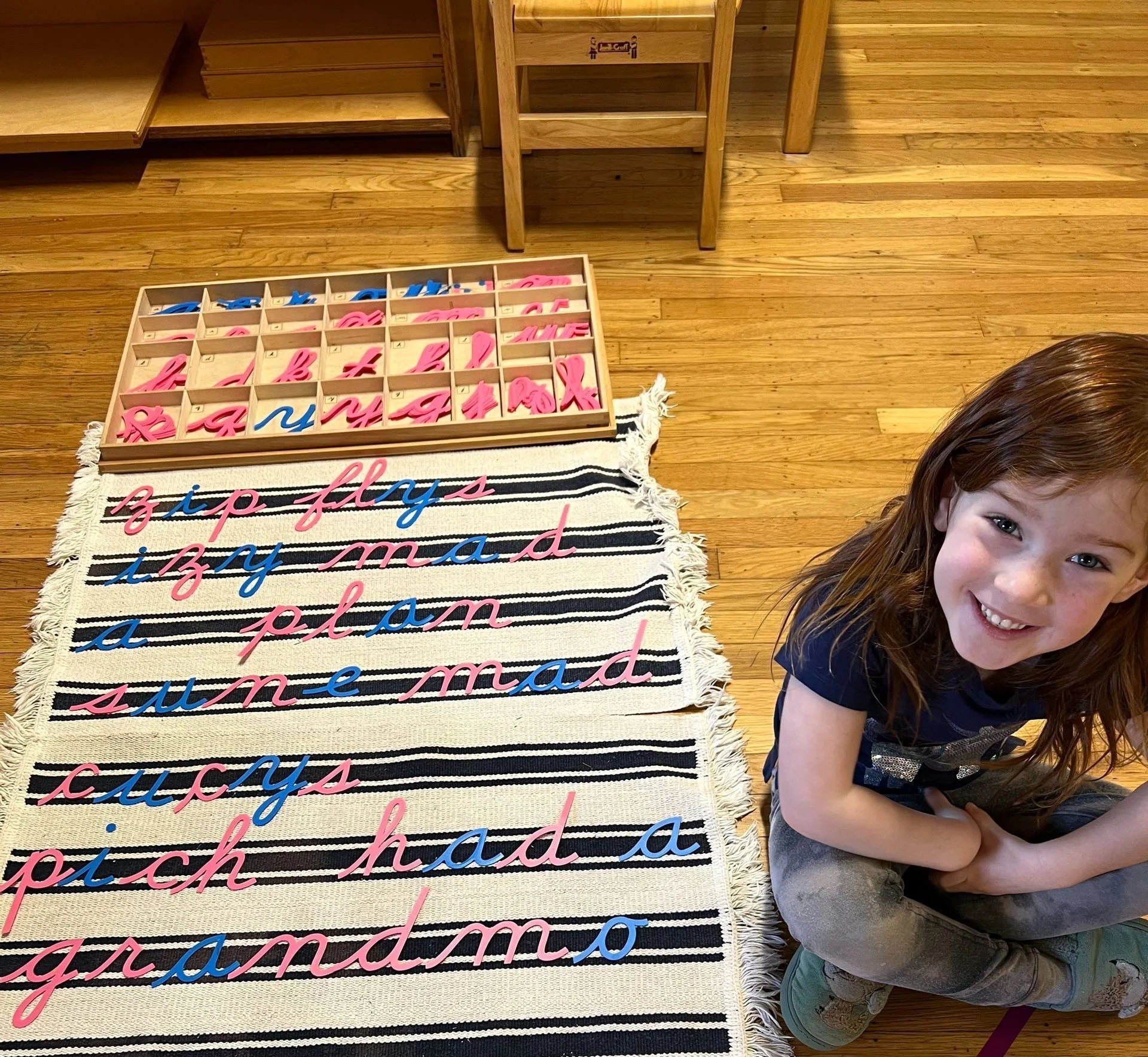
The Primary program is truly a gift to your child. Designed for children between the ages of 3 to 6 years, it is an opportunity to nurture his individual development within the context of a group setting. The result? Self-confidence, joy and a lifelong love-for-learning.
-
Because the curriculum is individualized, your child can work at their own pace while participating in a mixed age classroom community. Your younger child learns by observing the behavior and activities of the older children. Your older child gains self-confidence, leadership skills, and responsibility by setting an example for younger friends.
-
Your child will be introduced to a broad range of concepts and activities in individual and small group lessons. Your child gets to choose meaningful activities to explore, repeat, and perfect.
-
Our Montessori trained teachers chose this career because of their love for children and their dedication to Montessori. Their depth of training and knowledge is amplified by the joyful and deep relationship they develop with your child throughout their three- or four-year journey together.
-
Unlike conventional classrooms, where all children are expected to pay close attention to the teacher, our program does the opposite – the teacher is trained to closely observe your child’s interests, tendencies, and needs. You won’t see the teacher standing at the front of the classroom, but rather down at your child’s level, engaged with her or a small group.
-
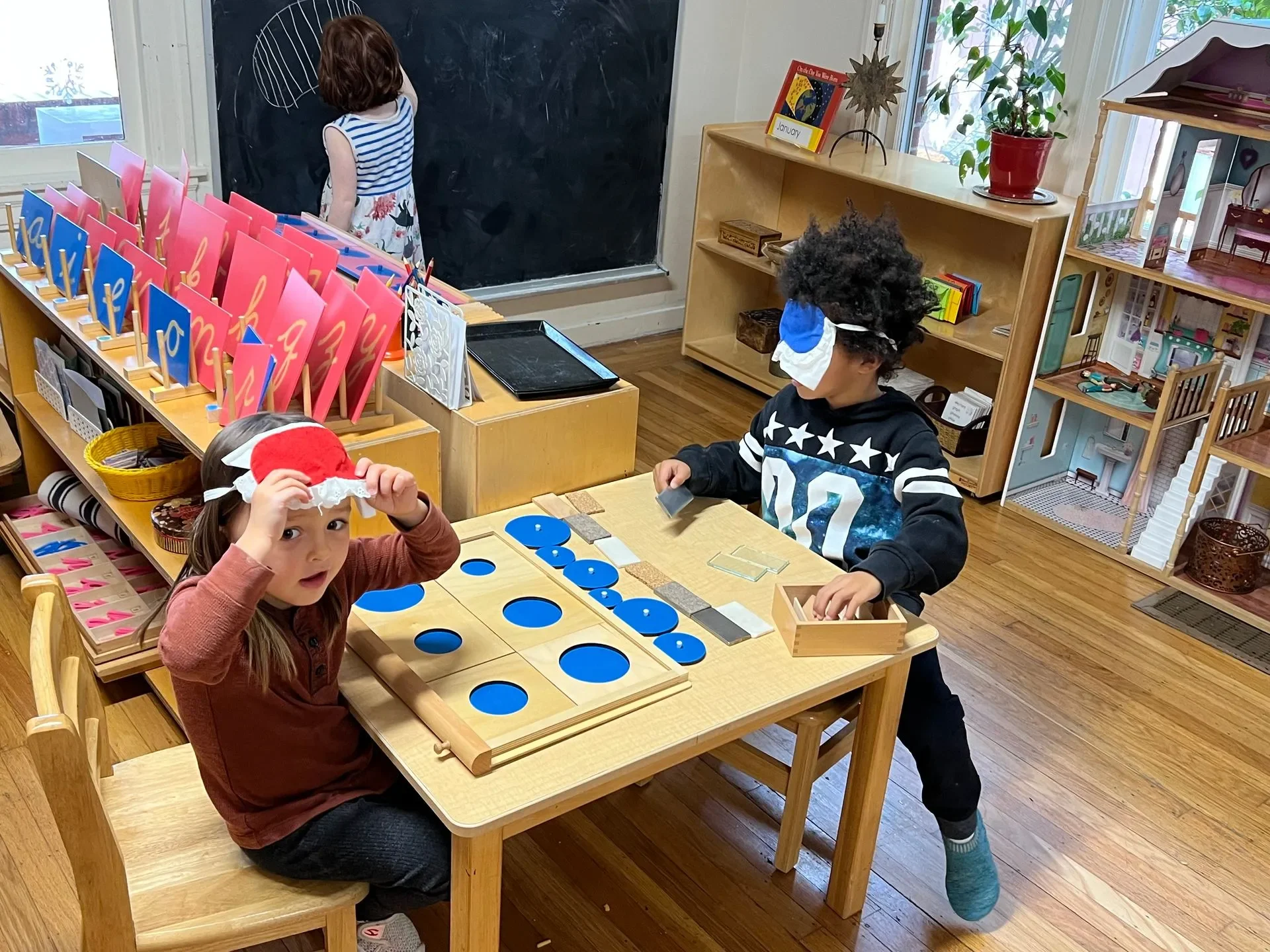
The scientifically designed Montessori materials help your child learn through hands-on use and exploration. Through continued use, he develops as a concrete understanding of abstract concepts, such as mathematics, providing a solid foundation for learning into the future.
-
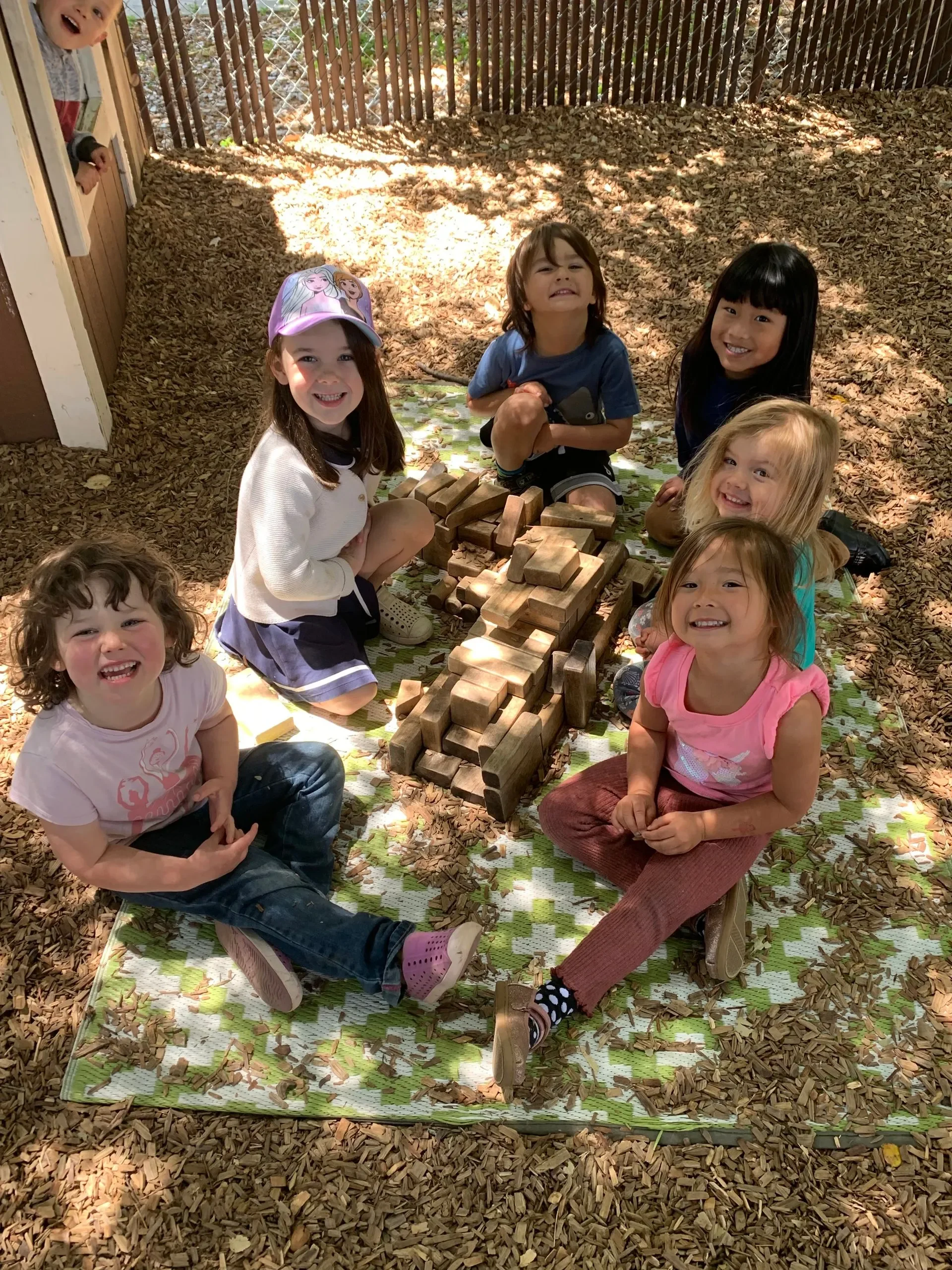
While most of the day is spent in self-directed work, there are also times for group activity and play. The teacher may gather a group for songs or to tell stories about a cultural, scientific, or historical theme of interest. Ample time is also given to run, dig, explore, and play with friends outdoors.
-
Instead of a top down curriculum based upon age, the teacher is trained to respect your child’s unique potential and connects him with the lesson best suited at that precise moment of development. Your child will be challenged according to his ability, not to a generic standard.
-
The teacher works to perfect the environment—in it, the children work to perfect themselves. Our teachers put tremendous care and attention to detail into the learning environments with their low shelves, beautiful artwork, books, and cultural items of interest to pique your child’s interest and stimulate her senses. The children respond by developing a sense of classroom ownership and a drive to care for their space, further deepening the bonds of the community and their quest to learn.
-
The Children’s House classrooms are designed to help your child become his best self. Through “grace and courtesy” activities, we teach your child how to solve conflicts, how to act politely in social situations, and how to be kind and helpful to friends. Guides support children as they learn how to sustain focused and concentrated attention, think clearly and constructively, resolve conflicts peacefully, and express themselves through language and the arts.
-
Montessori is a continuum of education that allows your child to build upon experiences each year. Your child will stay in the Primary classroom for 3 years, including the traditional “kindergarten year” – when the seeds of learning come to fruition. Reading and writing come to life from sounds and symbols. She is introduced to numbers and the decimal system. She learns about geometric figures and the political countries of our world. She leaves the program with a strong set of academic skills; but, far more importantly, with the attitude that learning is fun, exciting and boundless.
-
We love Nature’s Way Montessori. We have had our son enrolled at this school for over a year. He started in the ladybug room at since age 2 1/2. He transitioned to the Butterfly class at age 3 and is flourishing. Ms. Monica is the head of school and employs professionally trained Montessori teachers for each classroom. It is the best preschool and we love it!
— Carrie-Anne Wood
-
It’s so hard to believe it’s time to say goodbye. I cannot tell you how grateful I am for the forces that led us to you and Nature’s Way. Our experience as a family has been profoundly special in so many ways. My heart aches as we stand at this point of departure but we know all will be well and my sadness comes from all of the great joys we experienced at your school. Nature’s Way will be a part of our lexicon and memory bank as a family and as a community long, long after we leave.
— James, Sinead and Elan
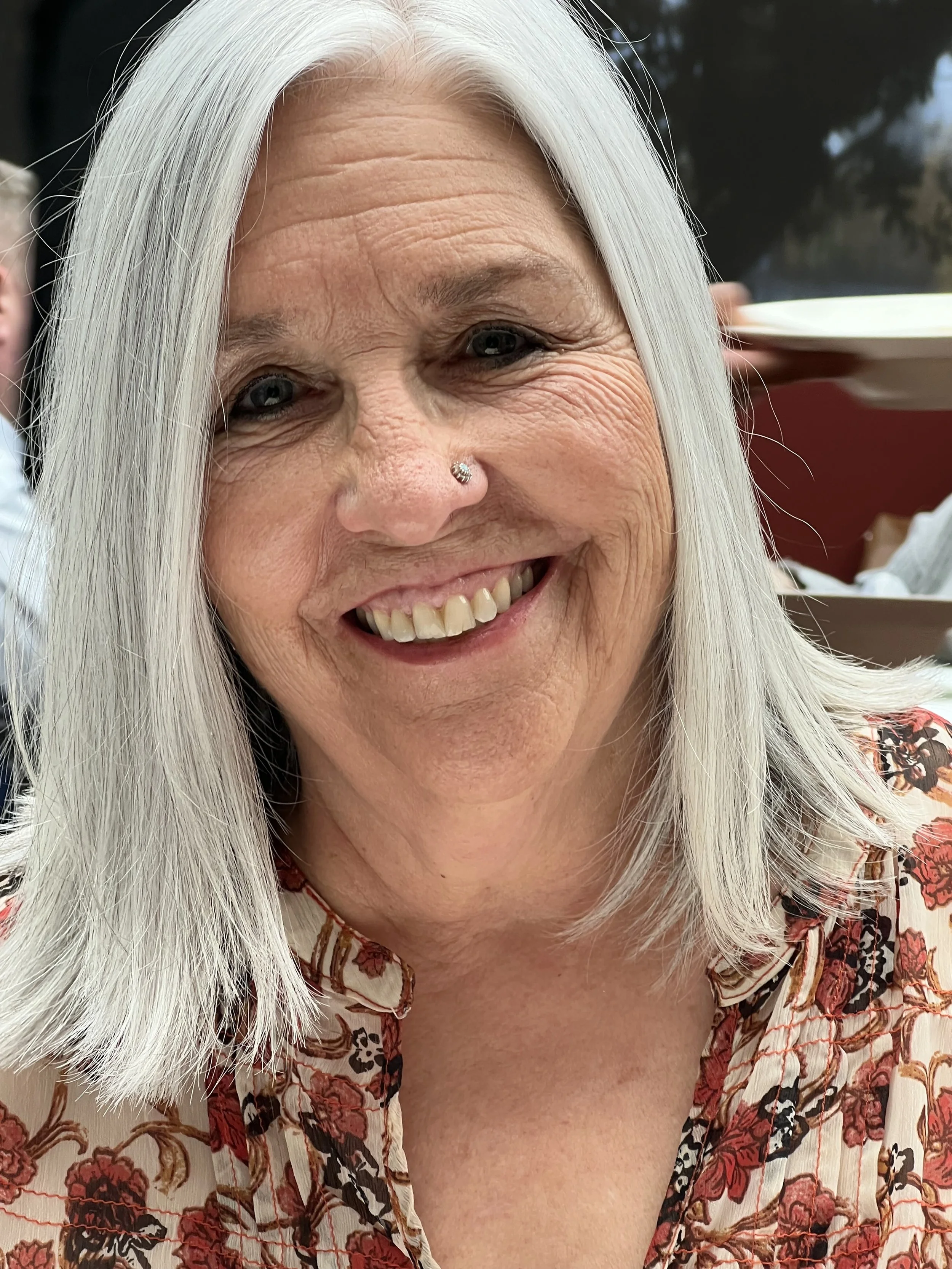
MONICA MACDONALD
HEAD OF SCHOOL
“There must be provision for the child to have contact with nature; to understand and appreciate the order, the harmony and the beauty in Nature….so the children may better understand and participate in the marvelous things which civilization creates.”
Secret of Childhood
Maria Montessori